Showing posts with label SciFi. Show all posts

7 February 2018

#Book review: The Amant Chronicles (#scifi by @brunnabendmj)


The Amant Chronicles, authored 2017 by M. J. Brunnabend, comprises an enthralling science fiction tale adapted well to the needs of die-hard fans of the genre. The book even stands out as being among the very best independently authored works of its genre.

Among the characters, Amant Ducet is an alien-human hybrid, whose adventure takes place centuries in the future. Human girl Jennifer Winston's abduction creates the background for a story filled with thrills, featuring interstellar intrigue, spies, and conflict. Action and mystery await.

Enchanting romance is also added to this high-velocity space opera story. Strong female characters dominate the plot, and mystery drives readers on desperate to know what happens next.


Independent publisher Maquis Books - now named Harry's Bookshelf - placed The Amant Chronicles on its shelves in January, describing the book as "magic" on 27 January.

Clubof.info's score: ★★★★★★★★☆ 9/10

Read More »

9 January 2015

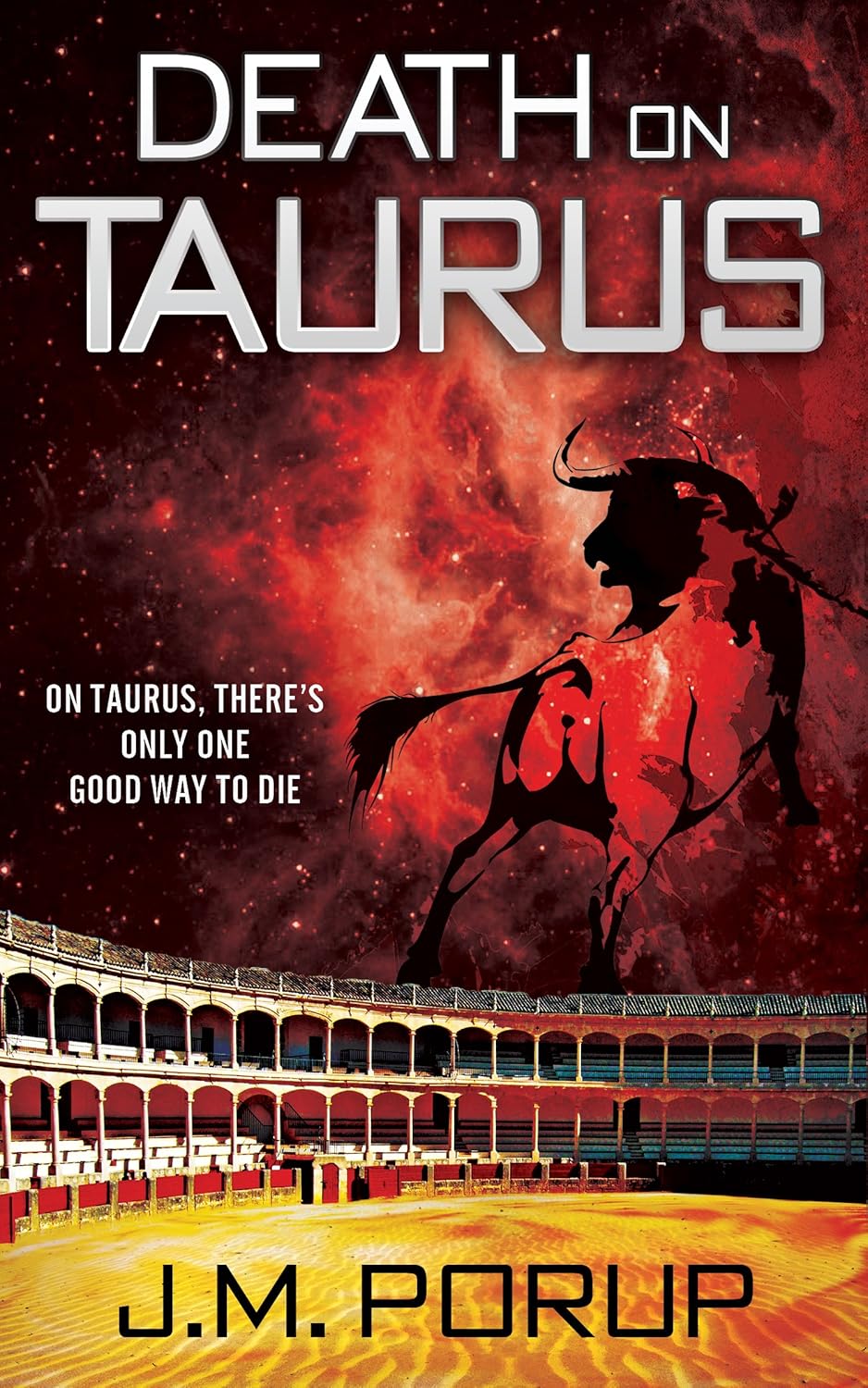
Review: Death on Taurus by J. M. Porup

. @hjbentham. @toholdaquill. #sciencefiction. #book. #review.


Another excellent and striking contribution to the genre by J. M. Porup.

Along with Dreams Must Die, this is an excellent book to start with for any reader new to J. M. Porup's sci fi. This epic story won't disappoint, and the only way you can discover this for yourself is to download.

From the book description on Amazon:
On Taurus, there's only one good way to die. 
On the bullfighting planet of Taurus, in the far distant future, a genetically engineered race of half-man, half-bull stages ritual blood sacrifices to the gods—human viewers light-years away. Vizzer, the high priest who presides over the daily slaughter, loathes the fights and wants to end them. 
When news arrives that the humans have destroyed themselves in an interstellar civil war, he deposes the king and outlaws the fights. But not all the humans are dead. Carlos the Creator lies in stasis on Taurus itself. Vizzer comes face to face with an enraged and ancient god. And in so doing, he must also confront the truth of his own savage nature.
By Harry J. Bentham - More articles by Harry J. Bentham

Enter your email address:


Delivered by FeedBurner
Read More »

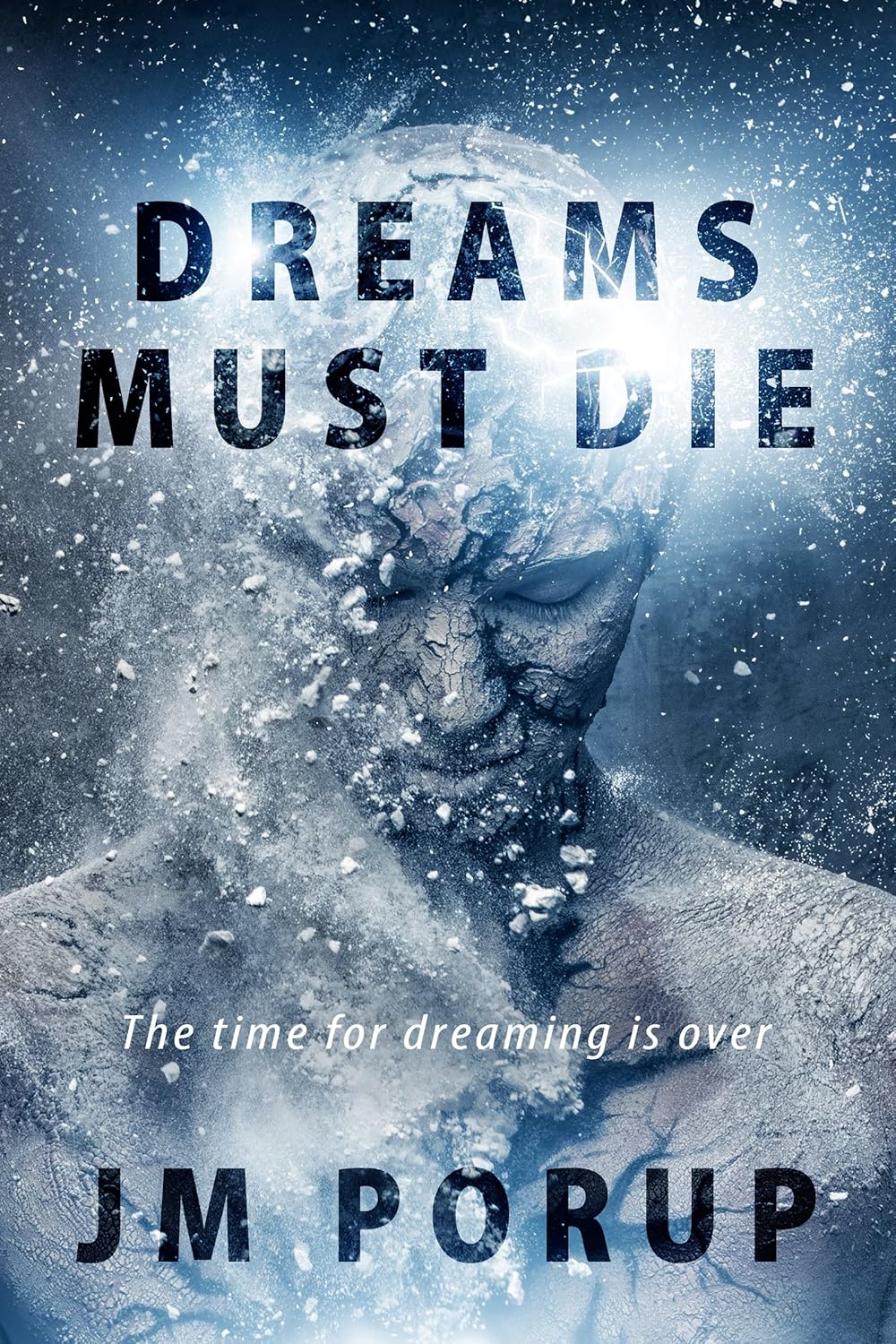
Review: Dreams Must Die by J. M. Porup

. @hjbentham. @toholdaquill. #sciencefiction. #book. #review.


All of J. M. Porup's science fiction is pioneering and valuable literature, and this is my perspective as a science fiction story contributor myself.

In particular, I find the narrative voice present throughout Porup's work to be gripping and more stimulating in a way that would appeal to a vaster readership than mine. I discovered this mainly through Dreams Must Die and I encourage readers to download the book as a starting point to reading further sublime works by the author. I hope to be blogging more thoughts on it.

From the book description on Amazon:
The time for dreaming is over. 
Jimmy Shade kills dreams. It’s his job. As a member of the elite Dream Police, he defends the Collective against that poisonous nocturnal ooze. 
But when Shade gets infected with a dream, he finds himself on the run from his former colleagues. He must choose between his love for the Collective--and the dream he cannot live without.
By Harry J. Bentham - More articles by Harry J. Bentham

Enter your email address:


Delivered by FeedBurner
Read More »

21 October 2014

Buy ClubOfINFO on eBay UK

. @eBay_UK. #eBay. #books. #bargains. #fiction. #collections.


ClubOfINFO's fiction publisher, Maquis Books, is now selling a broad selection of popular book titles through the popular online retail website eBay.

You can now find the Maquis Books store under eBay user /maquisbooks. The page there contains everything from collections belonging to the authors whose works are represented at Maquis Books, to a developing inventory of nonfiction and fiction titles at generous prices. While at the moment sales are limited to the UK, effort will soon be invested into considering making the books also available in the US to reach a much wider readership.

Initial emphasis will be placed on finding futurist titles, widely sought works like cult expert Robert Jay Lifton's Thought Reform and the Psychology of Totalism (1989) - for which we already provide the best available offer - and science fiction titles.

We also recommend you keep a look out for creepy stories and book choices via Maquis Books this Halloween.

In future, the scope of titles and products offered by Maquis Books will extend significantly, covering chick-lit, mystery, romance and children's books. Also, retro video-game titles and other entertainment, particularly from the 1990s, will be considered for listing at the Maquis Books store.

Keep track of everything offered by following Maquis Books at eBay today

Enter your email address:


Delivered by FeedBurner
Read More »

22 July 2014

'A struggle between humans and nature'

. @IEET. @HJBentham. @ClubOfINFO. #nature. #philosophy. #ebook.


There is often imagined to be a struggle between humans and nature. How does this struggle originate, and what is its resolution? Such a question is central to some religious traditions, and has much room to be explored in literature.

Nature is used to describe everything that lies outside of human agency. Disasters and disease often fall under this description, although there is usually some element of human blame in such problems. Some people try to live or eat according to preferences that they call “natural”. In my view, this is a fallacy. When we use the word natural with its only workable definition, to represent something distinct from human agency, it means that anything resulting from human agency is unnatural and so it cannot be natural (even if it imitates nature). When it applies to human choices, natural is only an arbitrary label used by people to refer to anything they approve of.

Why would humans battle against nature? Perhaps suffering can be described as the most imposing and constantly surfacing part of nature in our lives, because it is ultimately caused by the laws of biology rather than human wills. We humans have vulnerable bodies and we rely on vulnerable, easily destroyed brains to exist, although it is very apparent that we would prefer not to be exposed in this way. Because this is so, the struggle to overcome humanity’s physical and medical vulnerabilities can be depicted as a battle against natureour nature.

The assertion that seeking invulnerability against suffering is an escape from cruel inevitabilities biology is certainly reflected in some philosophers, such as Friedrich Nietzsche. Despite seeing the transformation of humanity into a higher creature as a noble task, Nietzsche saw this as necessarily involving suffering. As for the desire to end suffering, he deplored this as a product of weakness and the inability to accept the forces outside human control.

Nietzsche addressed the way in which religious traditions give moral assurances against suffering. Religions offer promises of justice that run contrary to the natural order in which the strong are favored over the weak. The Christian doctrines of the fall of man and eternal Heaven are alike in their view that the world we know is flawed and polluted, and humans are instead meant to endure in paradise. Such myths have been easy for people to buy into, because it is often easier to tolerate suffering in the world and move on if one believes in a supernatural alternativea cosmic safety net for the weak and the deadafter it.

The other manifestation of our weak human refusal to accept suffering, but which actually works, is the desire to use science and technology to thwart suffering. Once we remove the supernatural, the only remaining assurances against suffering can necessarily come from the modernity of technology. In this sense, the idea of a technological singularity, after which the very best technology permitted by the laws of physics will get within reach, represents the only “true” paradise that could ever be inherited.

But what if a paradise, an all-encompassing solution to suffering, is impossible? A universe with high suffering is inherently more likely than a universe without it, because the “anthropic principle” does not contain any guarantees against mortality and suffering. The anthropic principle says human life exists only because this is a requisite for us to notice our own existence. Therefore, the anthropic principle leads to a universe that merely tolerates conscious life for a limited time, rather than enriches it or sustains it. Contrary to religious claims, the universe in which we reside is not “designed” for us to inhabit, and we know this because it is mostly uninhabitable. The vacuum of space cannot be inhabited, and most locations in the universe have the wrong temperature or lack the elements needed for life to exist. What is conspicuous is that the universal constants allow us to exist, not in any kind of ideal state but just enough.

One can relate “extropy” (Kevin Kelly’s usage of the term) to the anthropic principle. Where the anthropic principle explains the human-friendly properties of the universe as existing simply because a human observer exists, extropy the guarantee of something even more complex and intelligent in the future. More than simply tolerating human life, then, a universe where humans exist includes the inevitability that human intelligence will evolve into or produce something far more enduring and glorious. After all, we are no pinnacle, and we are still witnessing an ongoing explosion of intelligence through such creations as the internet and the race to develop powerful AI.

Take a look at history and current cosmology, and we will see that extropy looks very valid. Humans have undeniably been improving their existence, and this is arguably due to the universe being filled with resources that are very friendly to our needs. There are seemingly infinite resources and tools in the universe for humans to exploit to improve their civilization, and the anthropic principle alone did not necessary contain any guarantee that such useful “equipment” would exist. Conceivably, there could be worlds where intelligent life exists but there can be no fire. There might also have been no sufficient quantities of ores or effective tools to build an advanced civilization. Certainly, humans have a lot more at their fingertips than the minimal equipment promised to them by the anthropic principle. Although there is not necessarily a God to thank for it, there is a lot to be thankful for.

What if there was a world where conditions were less favorable? Perhaps, if humans were too vulnerable, there would be less potential to develop civilization, and instead all thought would be dedicated to staying alive. A work of fiction I have dedicated to exploring this theme, The Traveller and Pandemonium, takes place in a more hostile universe than ours (as permitted in the “many-worlds hypothesis”), where a traveler is not convinced by the idea that humanity could have arisen in such unfavorable conditions. Determining that humanity belongs in another world, he searches vainly for the solution.

The traveler keeps his quest secret, aware that most people will condemn him as a religious nut searching for Heaven if he talks about it, but there is actually a rational basis for his view that humans belong elsewhere. The world in which he resides is genuinely toxic and inhospitable to humanity, humans are vulnerable to every creature in the world around them, and they are rapidly going extinct. It looks like a human colonization gone awry on a hostile alien world, although no-one knows how it got that way.

The two strategies against suffering in the world can be described as surgical and spiritual. Those who advocate “spiritual” solutions are only offering window-dressing to humanity while they greedily seek power. Those who advocate “surgical” solutions might not seem beautiful or perfect in what they promise, but they are the only ones promising something real, offering something tangible that could really fight away the uglier characteristics of the universe and save what can be saved.


By Harry J. Bentham - More articles by Harry J. Bentham

Originally published at the Institute for Ethics and Emerging Technologies on 17 July 2014

Just send us your email address to get ClubOfINFO articles delivered for free.


Delivered by FeedBurner
Read More »

18 July 2014

Squalid Worlds and Afterlives

.@hjbentham .#Follow @ClubOfINFO .#scifi. #philosophy. #fantasy. #Kindle.


People were, historically, more prone to believe in a Heaven after death when their living standards and life expectancy were poorer. It is appropriate that in a speculated post-apocalyptic or dystopian world, characters should be very prone to such belief.

Also, the despair of living in a squalid and unfair world usually leads to strange theories about how things got that way, and some ideal alternative is often imagined to exist elsewhere or at some point in the future. Hardline, cultic and extremist behavior flourishes when humans are perceived to be facing an existential threat. Religious traditions positing an afterlife as certain and assured are inherently hardline, because the existential threat addressed by them is death itself – that ticking clock from which none of us will escape. When other existential threats surface, the number of hardline and fanatical ideas increases exponentially.

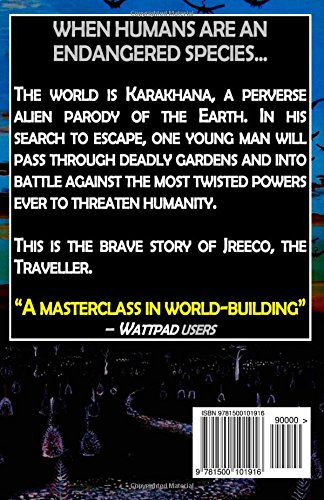
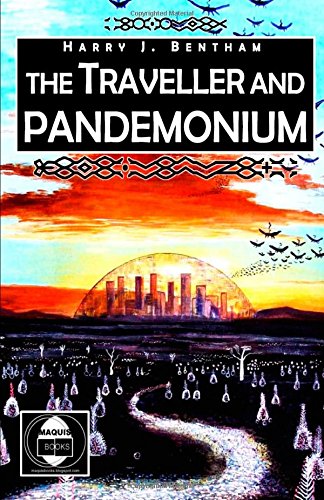
To consider this subject, I used it to shape themes in my first full-length novel The Traveller and Pandemonium, authored with great care from 2011-2014. In the fictional world of the book, humanity is under much more nightmarish pressure than it is on Earth, and this pressure results in a plague of unlimited conflict and fanaticism tearing civilization apart. Rather than humans controlling and threatening the natural world, the natural world is encroaching on humans and threatening them. Humans are forced to cage themselves away for protection from the hostile aliens inhabiting the world in which they have found themselves, producing the surreal image of cities contained in bird-cage-like domes to shield them from the roaming creatures outside.

In a sense, the world I created for this story does not abide by the anthropic principle – a principle of cosmology which states that the world must include coincidences that support the evolution and existence of the people observing it, or there would be no such observers. Due to this principle not functioning in the world of the story, the alien setting of the story is threatening the human inhabitants with extinction rather than supporting them.

Faced with such a deadly situation from the outset, the main character, nicknamed “the Traveler”, is searching for the answer. How could humans exist in a world that fundamentally does not support or give any illusions of meaning to their existence?

By Harry J. Bentham - More articles by Harry J. Bentham

Just send us your email address to get ClubOfINFO articles delivered for free.


Delivered by FeedBurner
Read More »

15 July 2014

Political futurism, ethics energized by sci-fi

.@hjbentham .@dissidentvoice_ .#scifi. #philosophy. #fantasy. #Kindle.


Literature has served an indispensable purpose in exploring ethical and political themes. This remains true of sci-fi and fantasy, even if there is such a thing as reading too much politics into fictional work or over-analyzing.

Since Maquis Books published The Traveller and Pandemonium, a novel authored by me from 2011-2014, I have been responding as insightfully as possible to reviews and also discussing the book’s political and philosophical themes wherever I can. Set in a fictional alien world, much of this book’s 24 chapters are politically themed on the all too real human weakness of infighting and resorting to hardline, extremist and even messianic plans when faced with a desperate situation.

The story tells about human cultures battling to survive in a deadly alien ecosystem. There the human race, rather than keeping animals in cages, must keep their own habitats in cages as protection from the world outside. The human characters of the story live out a primitive existence not typical of science-fiction, mainly aiming at their own survival. Technological progress is nonexistent, as all human efforts have been redirected to self-defense against the threat of the alien predators.

Even though The Traveller and Pandemonium depicts humanity facing a common alien foe, the various struggling human factions still fail to cooperate. In fact, they turn ever more hostilely on each other even as the alien planet’s predators continue to close in on the last remaining human states. At the time the story is set, the human civilization on the planet is facing imminent extinction from its own infighting and extremism, as well as the aggressive native plant and animal life of the planet.

The more sinister of the factions, known as the Cult, preaches the pseudo-religious doctrine that survival on the alien world will only be possible through infusions of alien hormones and the rehabilitation of humanity to coexist with the creatures of the planet at a biological level. However, there are censored side effects of the infusions that factor into the plot, and the Cult is known for its murderous opposition to anyone who opposes its vision.

The only alternative seems to be a second faction, but it is equally violent, and comes under the leadership of an organization who call themselves the Inquisitors. In their doctrine, humans must continue to isolate themselves from the alien life of the planet, but this should extend to exterminating the alien life and the aforementioned Cult that advocates humans transmuting themselves to live safely on the planet.

I believe that this aspect of the story, a battle between two militant philosophies, serves well to capture the kind of tension and violent irrationality that can engulf humanity in the face of existential risks. There is no reason to believe that hypothetical existential risks to humanity such as a deadly asteroid impact, an extraterrestrial threat, runaway global warming, alien contact or a devastating virus would unite the planet, and there is every reason to believe that it would divide the planet. It is often the case that the more argument there is for authority and submission to a grand plan in order to survive, the greater the differences of opinion and the greater the potential for divergence and conflict.

Social habits, politics, beliefs and even the cultural trappings of the different human cultures clinging to the alien planet are fully represented in the book. In all, the story has had significant time and care put into refining it to create a compelling and believable depiction of life in an inhospitable parallel world, and readers remarked in reviews that it is a “masterclass in world-building”.

The central character of the story, nicknamed the Traveler, together with his companion, do not really subscribe to either of the extremist philosophies battling over humanity’s fate on the alien planet, but their ideas may be equally strange. Instead, they reject the alien world in which they live. With an almost religious naïveté, they are searching for a “better place”. It is through this part of the plot that the concepts of religious faith and hope are visited. Of course, at all times the reader knows they are right – there is a “better place” only not the religious kind. Ultimately, the quest is for Earth, although the characters have never heard of such a place and have only inferred that it might somehow exist and represent an escape from the hostile planet where they were born.

Reviewers have acknowledged that by inverting the relationship of humanity and nature so that nature is on the advance and humans are receding and diminishing in the setting of this science-fiction novel, a unique and compelling setting is created. I believe the story offers my best exploration of a number of political and ethical themes, such as how people feel pressured to choose between hardline factions in times of extreme desperation and in the face of existential threats. Science fiction is a worthy medium in which to express and explore not only the future, but some of the most troubling political and philosophical scenarios that have plagued humanity’s past.

By Harry J. Bentham - More articles by Harry J. Bentham

Originally published at Dissident Voice on 9 July 2014

Just send us your email address to get ClubOfINFO articles delivered for free.


Delivered by FeedBurner
Read More »

11 July 2014

Recommended author: Stephen Sweeney

. @stephenjsweeney. #bio. #scifi. #fantasy. #ebook. #kindle. #space.

Born in Brighton, UK in 1977 to Terry and Emma Sweeney, Stephen Sweeney lives in London, where he works in electronics. He is also an ambitious independent science fiction author, which is the main thing we at ClubOfINFO always want to talk about. Among his published titles are such exciting works as The Battle for the Solar System, perhaps his most notable novel series.

The background of an author is key to your entitlement as a reader to rely on them as a source of quality fiction. That's one area where Sweeney is surely not weak. He studied Environmental Biology at Oxford Brookes University, giving him a unique vantage point from which to create his compelling worlds of science fiction.

While Sweeney does admire the leading giants of British fiction such as J. K. Rowling, Stephen King is one of Sweeney's most important influences. He jokes that he "doesn't read too much King any more since he's too scared of finding an old decaying dead woman lying in his bathtub, grinning at him."

You can find Sweeney's works listed at Amazon. Also follow his Twitter feed or visit his personal website.

ClubOfINFO is always looking to raise the profiles of independent science fiction writers, because we view the exploration of science and technology through fiction as a key avatar of human imagination and progress. If you have anyone in mind, or you'd like to get favorable coverage of your own works here, contact us to get a page at ClubOfINFO!

Use this form to get ClubOfINFO articles delivered for free.


Delivered by FeedBurner
Read More »

24 June 2014

Dave Robinson's "Price of Imperium" +

.@StephenJSweeney@DCRWrites@HJBentham. @CaptainDucttape. #scifi. #Kindle. #ebook.

Check out the work of some of the best indie authors we can find. All of their work can be found at Amazon. Just click the links to see more. Indie authors don't get hyped like mainstream authors. They need browsing by folks like you to get their work seen and appreciated.

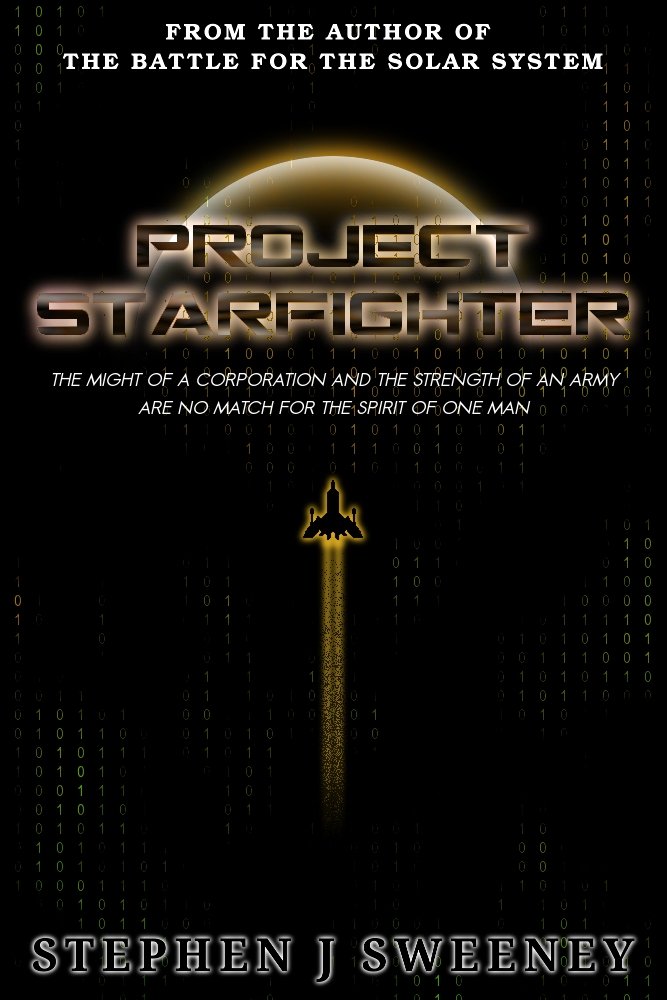
Stephen Sweeney's Project Starfighter: Chris is not willing to surrender, not willing to give up the fight just yet. He has a plan - to rebuild the Resistance, bring together others, and keep up the battle against the Corporation. And he will soon find himself teaming up with the most unlikely of allies - a sentient starfighter, known as Athena, formerly belonging to the very company he is trying to take down.

Dave Robinson's Price of Imperium: The Imperium is on the brink of annihilation, and only one person can save it. After centuries of peace, the Enemy has returned, and the only one who can unlock the Imperium's last line of defense is the rightful emperor. Unfortunately, the throne has been empty for a decade.

Harry J. Bentham's Wrong Century: Piracy in space, as a rogue warship is forced to adopt an ancient violent tactic to steal the vital technology it needs to survive. This book includes three complete stories.

Shawn Jones' Warrior's Blood (The Warrior Chronicles): As they prepare their own colony on Mars, new enemies stand against Cort and his family. The ensuing conflict liberates Mars from Earth oversight and leads to the founding of an empire. But before it’s over, the Ares Federation will lead humanity onto the galactic stage.

Just send us your email address to get ClubOfINFO articles delivered for free.


Delivered by FeedBurner
Read More »

20 June 2014

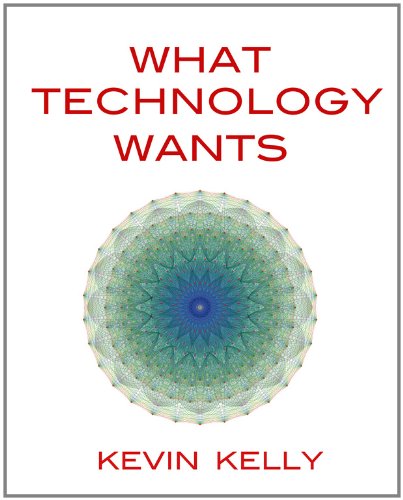
Review: What Technology Wants by Kevin Kelly (2010)

.@Kevin2Kelly .#Book .#Review .#Futurism .#SciFi.

From now on, ClubOfINFO will be sending its readers a mini book review every week. These will be focusing on important and current events and the crucial debates of the century, aiming to broaden our readers' understandings of the crossroads of politics and technology.

Wired cofounder Kevin Kelly's What Technology Wants (2010) is a revolutionary book presenting the theory of the technium - a term Kelly uses to describe the ever expanding sphere of advanced technology and all that could potentially emerge from it.

Kelly's book gives rise to an unprecedented radical vision of humanity's future with profound social, economic and political implications: the technium is not just what the engineers and scientists have made it to be, but a lot more. The technium has a will of its own - a powerful and enduring instinct to expand the bounds of the possible and liberate every human individual.

Like the natural environment before it, the technium is growing into a vast jungle of infinite resources and possibilities. Kelly sees the growing emergence of this complexity and glory as "extropy" - the progressive transformation away from a simple and barren universe towards a vastly sentient and populated universe exploding with intelligence.

The arms of the technium that are currently transforming the world, whether biotechnology or digital technology, lead endlessly towards liberation and the empowerment of the individual. No matter what the designs of the technology's owners were, all things that make the individual more powerful lead to the empowerment of the masses and the instruments of popular power and resistance.

In the promise of the technium, there is an ultimate solution to oppression and inequality in the world. As the technium leads humanity towards greater levels of freedom and individual empowerment, Kevin Kelly's work nods undeniably in the direction of the triumph of individuals over states. The future is not a bleak one of degeneration and extinction, but an unbelievably glorious one of enhancement, cultural enrichment and the supremacy of intelligence. This is what humanity has to work for.

Send us your email address to get more ClubOfINFO articles delivered for free.


Delivered by FeedBurner
Read More »

17 June 2014

This week's radical book recommendations

.@ioerror .@HJBentham .#ebook .#politics .#science .#scifi.

From now on, ClubOfINFO will be making a weekly list of recommended radical books coming from both fiction and nonfiction genres. These books will be related to our mission to talk about offbeat science and politics, and our choices at the crossroads of politics and technology. Science fiction, which is a noble exploration of how science and technology might affect society for better or worse, will always be of great interest and will be loyally recommended here.

These are ClubOfINFO's top 5 recommended ebooks available from Amazon for this week. We find each of these titles to be powerfully written and relevant to current events.

#1 No Place to Hide by Glenn Greenwald gives an extensive overview of the National Security Agency (NSA) spying scandal from the unique vantage point of the Guardian journalist who covered the disclosures from former NSA contractor Edward Snowden. No Place to Hide discusses, perhaps better than any other book book with the exception of Assange's Cypherpunks, the kind of safeguards and oversight required to salvage democracy from the abyss of state totalitarian mass surveillance.

#2 The Grand Chessboard by Zbigniew Brzezinski is a difficult read, by all accounts, but sales have risen since the development of the Ukraine Crisis. This book offers a detailed understanding of the self-indulgent and hawkish US policies that have given rise to the crisis in Ukraine. Most readers agree that no book gives a better account of the rationale for the US's violent obsession with distant countries and and its fixation on them as anchors for US power, favoring that power at all times over the safety or stability of other countries. This book exposes a kind of thinking among top US strategists that can only be compared with the Roman Empire or Nazi Germany. Nothing in this form of thinking is sympathetic to other nations, and everything in this form of thinking is about seizing or subordinating other nations to extend the lifespan of US military supremacy for as long as possible.

#3 Talks 2005-2013 (Free Speech) (Volume 1) by Jacob Appelbaum is a series of public talks. The author is a well-known hacker, cypherpunk, photographer and defender civil liberties. Also a co-author of Julian Assange's Cypherpunks, Appelbaum has established himself as one of the best-known defenders of internet freedom and this has culminated in repressive steps by regimes including the United States against him.

#4 Alien Fruit by Harris Tobias is the first book in a sci-fi series telling the story of a struggling colony on a hostile alien planet. Two brave teens fight against impossible odds to save their colony.

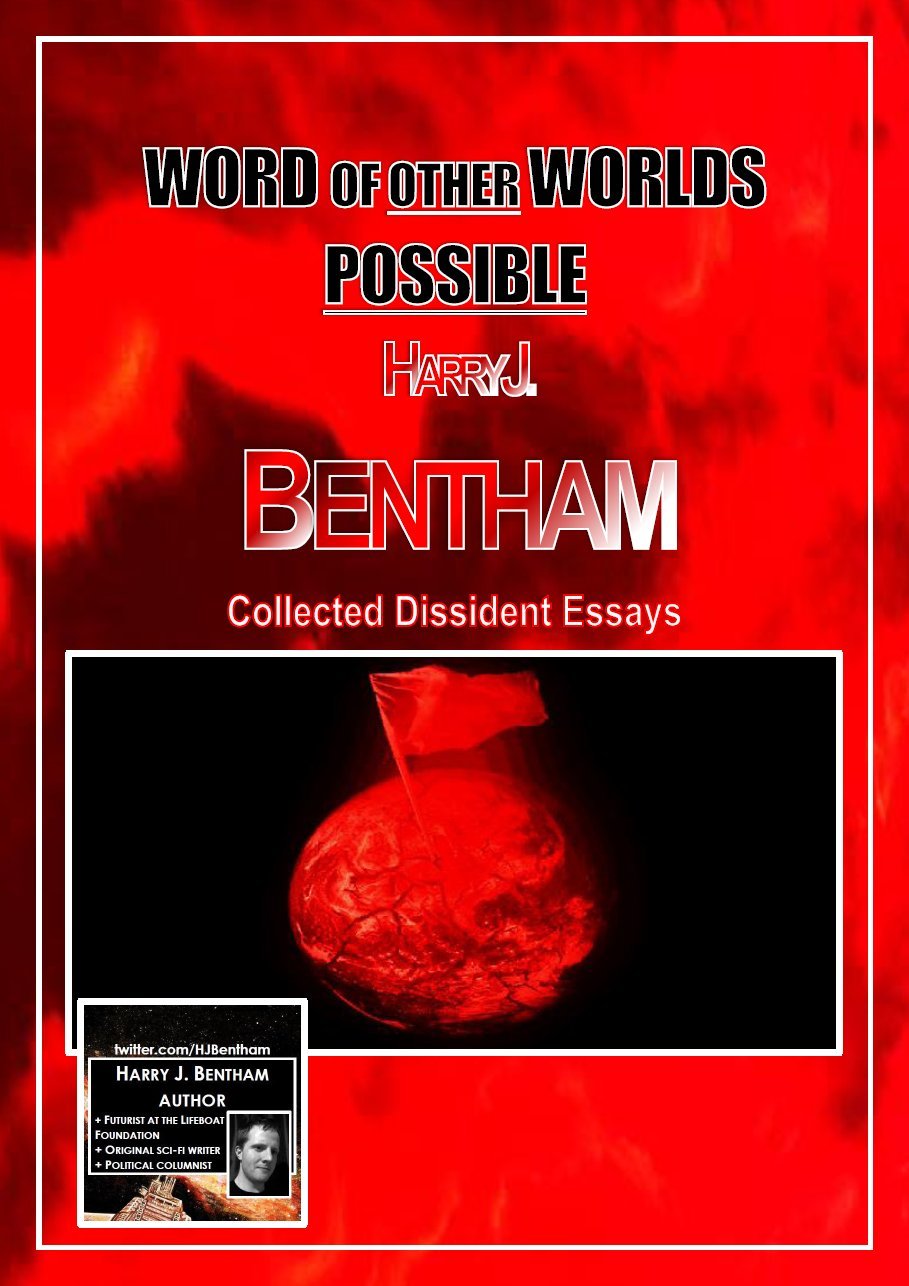
#5 Word of Other Worlds Possible by Harry J. Bentham is an fast-paced collection of short dissident essays authored by by the futurist anti-statist political commentator Harry J. Bentham. All previously published in the radical newsletter Dissident Voice, these essays explore such subjects as mass surveillance, the potential abuse of new technologies, and more importantly the period of social liberation promised by new technologies.

Want future recommendations from ClubOfINFO? Send us your email address.


Delivered by FeedBurner
Read More »

6 June 2014

#Book Review: The Traveller and Pandemonium (2014) by Harry J. Bentham @HJBentham

TheTraveller and Pandemonium (2014) is Harry J. Bentham’s science fiction opus in 2014 and the longest work written by Bentham. It is a full-length novel at 24 chapters, and includes many additional features that you won’t find in other books. After the Maquis Books review, we at ClubOfINFO feel a duty to compete by penning our own enthusiasm for this exquisite book.

By following the journey of Jreeco – a traveler who begins as a teenager in the initial chapters of the story – this is an adventure that soon turns into a story of war, tragedy and comradeship… on an alien planet. The genre is hard to describe, as the novel takes on the difficult challenge of creating a genuinely original plot when so many other books in the stores these days are forced to simply rehash exhausted themes and ideas. If an original story and a real change of pace are what you are looking for, this is the novel for you.

The balance of romance, adventure, violence and philosophy in this book is mastered by Bentham like an expert, which we can assume be the reward of years of drafting and development (the original draft was written as far back as 2011, according to Bentham). Political themes in the book are relevant and clearly influenced by the world events of the time at which Bentham wrote the book. In the political and war themes of the story, there is a clash of extremist philosophies, coupled with a desperate and unavailing war to oust an ancient authoritarian regime. Remember, this is told in a unique way and it is impossible to get bored, because it is all set against the backdrop of an apparently botched human colonization of an alien world. In Karakhana, the world of the story, humans are clinging for their very survival against the odds and have bifurcated into two great kingdoms with quite different ideas about humanity’s future. In this way, the story gets to explore the worst abysses of human fanaticism, desperation and hardline behavior in the most fitting possible setting – effectively imagining what kind of internecine fighting might be experienced by future humans if they took divergent paths with regard to their own evolution.

Calligraphy from the fictional nation of Krozan
Detail of the characters and opposing cultures involved in this story of intrigue and horror goes way beyond the best expectations that any reader might have. Bentham has even included beautiful calligraphy that brings each country to life, allowing the reader to imagine truly exploring this harsh world and the reflections of alternative humanity found in all its cultural embellishments. After reading your way through this adventure, you may just think you have really been to Karakhana – or visited a genuine record of the costs to humanity in settling an alien planet.

With its compelling tale of human individuals and cultures isolated in an alien world and struggling with matters of ethics and survival, the intrigue and darkness shown in The Traveller and Pandemonium is quite beyond imagination, beyond challenge. It is quite likely that nothing similar to this has ever been attempted in literature before, and no other recent work of fiction could be encouraged stronger for its profound themes and ideas.

Get this book now. And if you have a few seconds, send us your email address to get more ClubOfINFO articles delivered for free!


Delivered by FeedBurner
Read More »

3 June 2014

Maquis Books blog established - #book #scifi @MaquisBooks

Release from Maquis Books on 31 May:
Today, Maquis Books was set up by ClubOfINFO Circulation as a way of allowing fiction to be promoted, represented and shared by the  ClubOfINFO webzine. 
The mission of Maquis Books is simple. We'll be reprinting fiction works and short stories from indie authors who show genuine talent, both here on this blog and through other channels available. These stories will come primarily from Quantum Muse, but other sources of quality fiction may later be used too.We'll also be working as a publisher through Amazon's Kindle Direct Publishing (KDP) e-text platform, using the combined connections and expanding reach and influence of ClubOfINFO Circulation to promote the works that are represented at Maquis Books. Later, we will start to use Amazon CreateSpace to make our books available on a print-on-demand basis. 
Means of circulating successful books at Maquis Books will consist of:  
  • Reciprocal links
  • Marketing suggestions and support
  • Social media sharing
  • Content marketing
  • Attracting reviews
  • Attracting critiques
While Maquis Books acknowledges that these take time to have an impact, they eventually do cut into the market. We see ourselves as guerrilla fighters. We know our goals will probably not be achieved within a small time-frame -- but rest assured that they will be achieved. 
The first book to be represented at Maquis Books will be Harry J. Bentham's The Traveller and Pandemonium (2014). This will be made available in Kindle Edition by Maquis Books tomorrow on Sunday, 1st of June. In its proofreading process, this book has received overwhelming support from editors at a number of review sites and it is certainly right for promotion with us. Later, a "hard" copy will become available through Amazon US and international sellers too.
Get our upcoming review of this book. Send us your email address to get more ClubOfINFO articles delivered for free!


Delivered by FeedBurner
Read More »

27 April 2014

#BOOK: 5 excellent scifi and fantasy authors you should read @CLUBOFINFO

Like #SciFi? Take a look at CLUBOF.INFO’s selection here of excellent works by some less-known but nonetheless highly skilled sci-fi authors, whose books you can download or get shipped to your address right now. Relax with some captivating reading by clicking the links below.
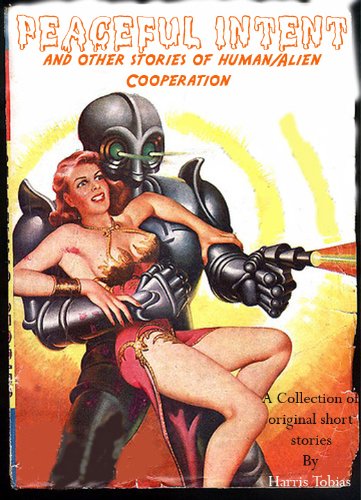
#1 PEACEFUL INTENT—TALES OF ALIEN/HUMAN INTERACTION by Harris Tobias explores the comedy or tragedy that could happen when aliens and humans interact. In 31 entertaining original stories, Harris Tobias takes his readers on a fun ride through the cosmos. Harris Tobias is one of the best authors often featured at Quantum Muse, where his work can be found frequently. His fiction has appeared in Ray Gun Revival, The Calliope Nerve, Literal Translations, FriedFiction and other obscure publications. 
#2 TIME WARS & OTHER SCI-FI TALES by Gordon Rowlinson provides readers with 11 stories of the unknown, the speculative and the fantastic. These stories vary from an interplanetary journey to a time-travel vacation adventure in the Cretaceous period and more. Gordon Rowlinson contributes to Quantum Muse, where his works are frequent and among the very best there. 
#3 OUTRUNNING THE STORM by Michele Dutcher tells of a world where baseline humans, clones, AIs, and tweaks will compete to claim their place in a social order ruled over by super-corporations. This is the first novel from Michele Dutcher, who has been writing Sci-fi for eight years and has been published multiple times in webzines which include Aphelion, Orion’s Arm, Quantum Muse and Bewildering Stories. With this experience, Michele is a highly capable author.
#4 THE WIZARD'S HOUSE by Jeromy Henry is a fantasy tale of the adventure of Sam and Angela when they are catapulted into magic, mystery and danger. Can they escape a duel between rival magicians? Can they use their wits and courage to find their way home? Will their lives ever be the same again? 
#5 SEARCH BEYOND: FIRST ANTHOLOGY by Harry J. Bentham is a collection of individual science fiction stories about a starship banished forever from Earth and lost in deep space. We find a universe with scarcely any interesting alien life to boast of, yet we can still scrape adventures from the depths of a mysterious universe paralleled only by the enigma of humanity’s own hyper-evolved technologies. Harry J. Bentham is a futurist adviser at the Lifeboat Foundation think tank, where he takes part in some of the defining conversations on emerging tech, and he is also a sci-fi writer with stories at publications including Quantum Muse.
To find other little-known sci-fi and fantasy authors trying to build their readership, visit www.quantummuse.com and discover the work featured there. In this golden age of indie book publishing, there is no reason at all to restrict ourselves to only reading the authors reviewed at the NYT!

That's not all, folks. To get much more than this for free, just enter your email address for future articles directly from CLUBOF.INFO:


Delivered by FeedBurner
Read More »

Featured

If the US Government Won’t Respect Freedom of Speech, AI Firms Should Move

“The US government,” artificial intelligence firm Anthropic informed the public in a June 12 statement, “citing national security authoritie...

Follow Me on Twitter